
SUPER EARTH FEDERATION • MINISTRY OF TRUTH • COLONIAL AFFAIRS
October 29, 2186 | Colonial Reconstruction & Civilian Affairs | by Lt. Dan Gerrous
Liberation is only the beginning
The liberation of a planet marks the end of enemy occupation. For its surviving citizens, however, it also marks the beginning of an enormous undertaking: rebuilding everything that freedom has cost them.
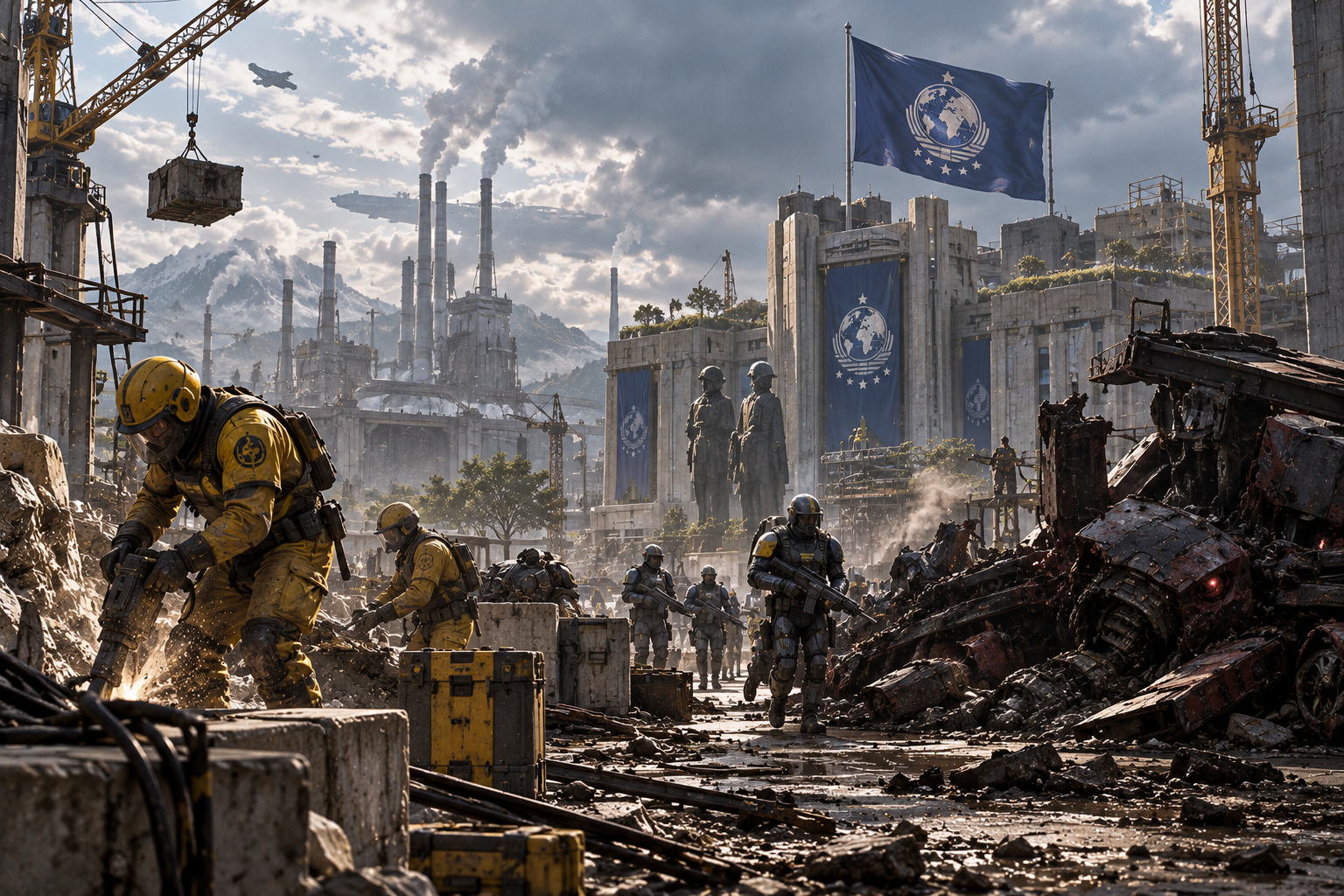
SUPER EARTH — Across the Federation’s frontier territories, the conclusion of a successful liberation campaign brings with it a familiar sight: triumphant Helldivers departing aboard Pelican shuttles, victorious SEAF formations securing strategic positions, and civilian administrators surveying what remains of their jurisdiction.
For the Ministry of Colonial Development, this moment represents not the end of an operation but its beginning.
A liberated planet must be made productive again.
Transportation networks require restoration. Power generation facilities must be repaired. Agricultural settlements must resume operations. Industrial infrastructure must be cleared of enemy contamination, unexploded ordnance, and, where applicable, substantial quantities of deceased enemy personnel.
These tasks rarely receive the attention afforded to spectacular orbital bombardments.
Nevertheless, without them, military victory cannot be converted into lasting prosperity.
The first seventy-two hours
Reconstruction priorities begin with securing critical infrastructure.
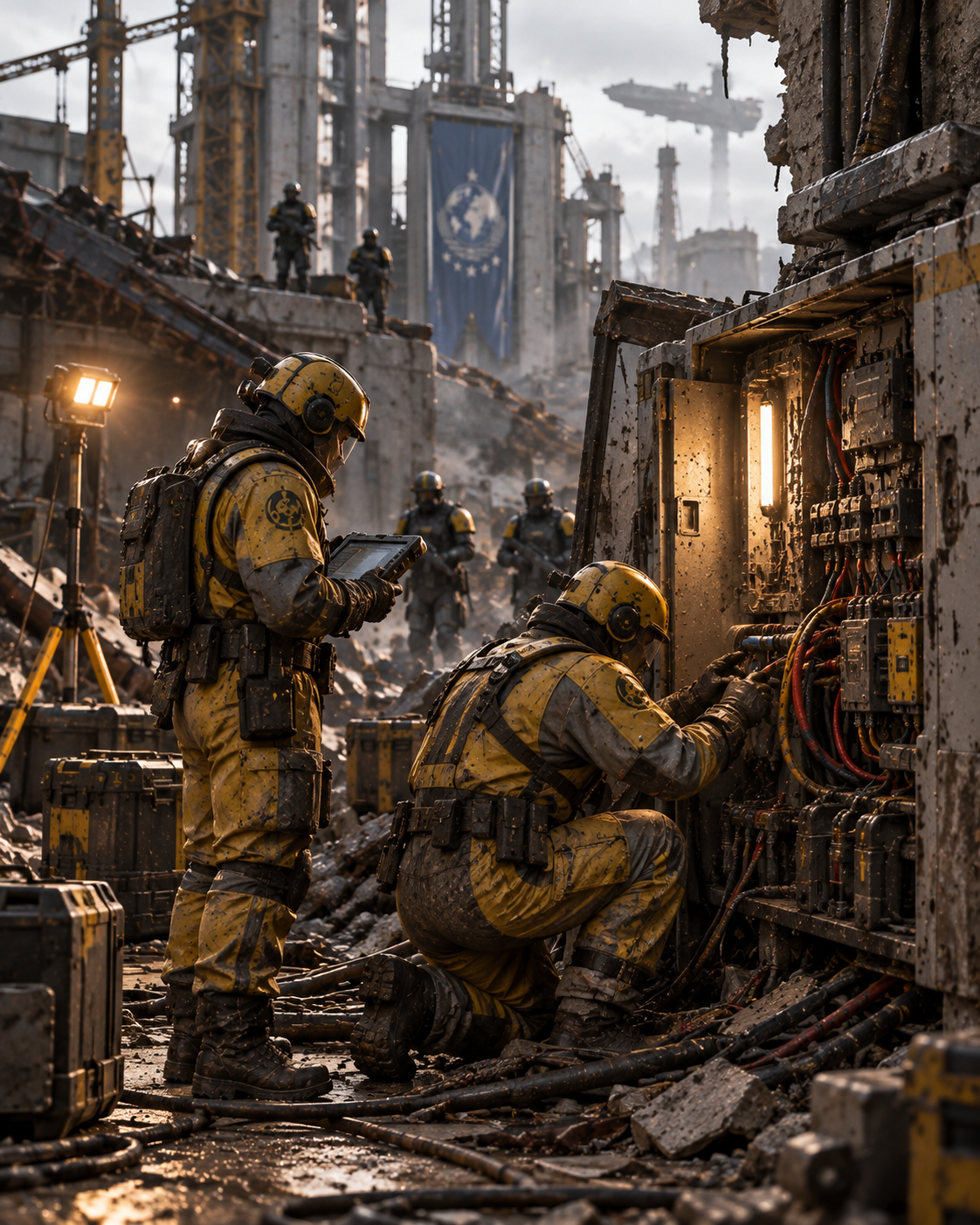
Engineering detachments assess roads, power stations, communications networks, and water distribution facilities. SEAF security personnel establish defensive perimeters while civilian recovery teams determine which settlements can safely accommodate returning residents.
The process can be complicated by the particular nature of the defeated occupying force.
Automaton-held territories may contain extensive industrial installations, defensive minefields, and machinery whose continued operation is incompatible with human habitation.
Former Terminid territories present different difficulties. Subterranean tunnel systems can destabilize foundations, while biological contamination may render agricultural land temporarily unsuitable for cultivation.
In both cases, reconstruction specialists must balance the urgency of restoring civilian life against the continuing possibility of hostile activity.
Ministry guidance recommends that citizens encountering unidentified enemy machinery refrain from activating it, disassembling it, or attempting to determine whether it can be repurposed as a household appliance.
The economics of returning home
The restoration of basic services represents only the first stage of recovery.
Factories must reopen. Mining operations must resume. Agricultural production must recover sufficiently to support returning populations and supply nearby military installations.
These activities are essential to Super Earth’s broader war effort, which depends upon productive colonies, functioning transportation networks, and reliable interplanetary logistics.
The Federation’s strategic reliance on logistical connections is well established. Super Destroyer navigation systems identify warp routes linking planetary systems, enabling military planners to recognize vulnerable supply networks and coordinate liberation efforts.
Civilian reconstruction therefore serves a strategic purpose beyond restoring familiar neighborhoods.
Every repaired factory strengthens the Federation’s industrial base. Every functioning settlement contributes to the economic stability of its sector.
Every successfully reopened tax office demonstrates that civilization has returned.
A victory worth maintaining
History demonstrates that liberation does not always guarantee permanent security. During the Second Galactic War, entire sectors have changed hands as enemy offensives threatened previously secured territories. The establishment of defensive positions such as the Menkent Line illustrates the importance of protecting strategic gains.
Reconstruction planners must therefore prepare not merely for peace, but for the possibility that peace may require additional military assistance.
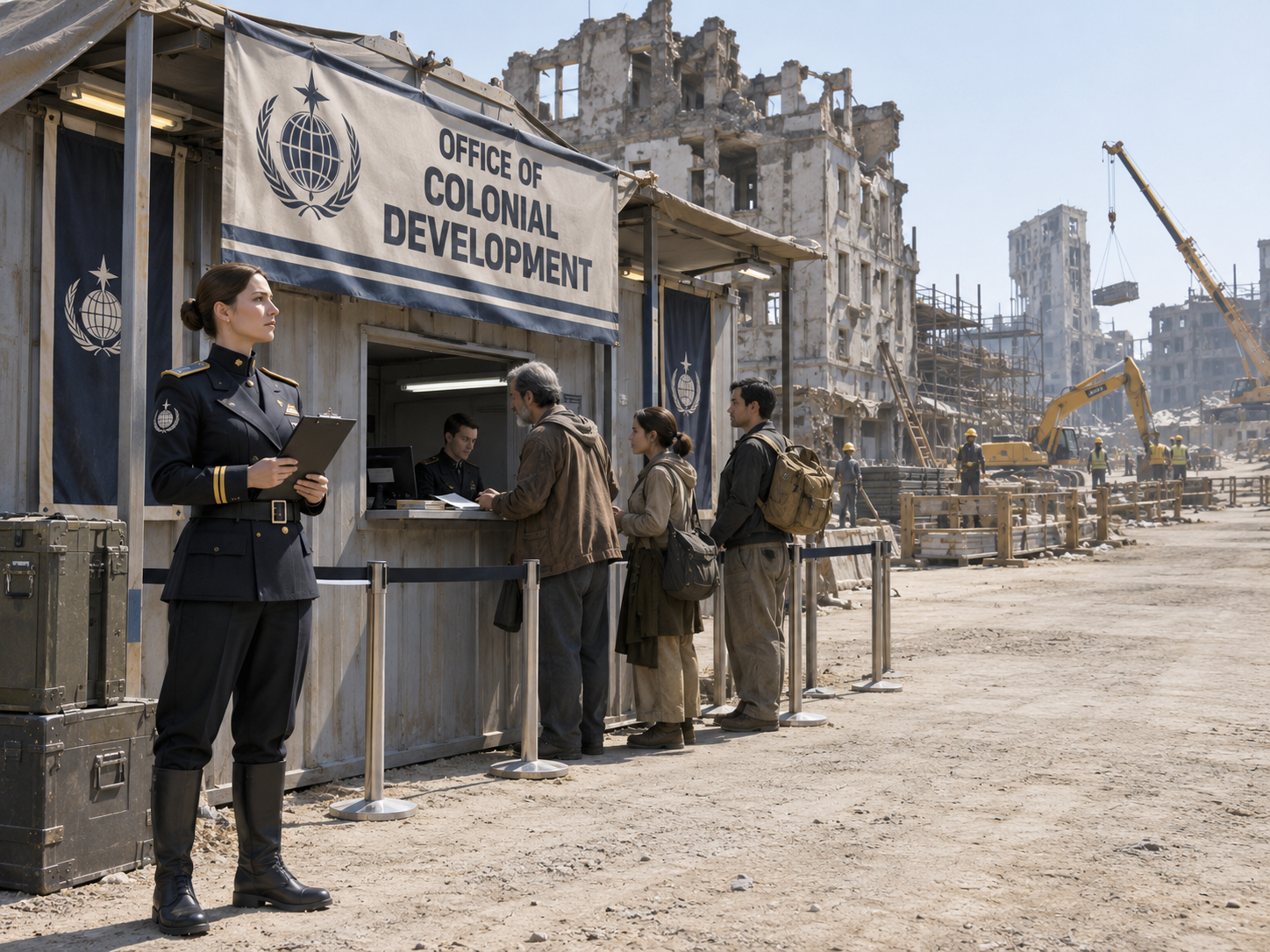
The Office of Colonial Development has consequently adopted a straightforward guiding principle: every restored settlement should be capable of supporting the next generation of citizens, industries, and defensive operations.
Critics have occasionally questioned whether repeatedly rebuilding settlements in contested regions represents an efficient allocation of resources.
The Ministry of Expansion considers the question improperly framed.
Freedom is not an investment from which Super Earth expects a return.
It is an obligation which every citizen is expected to fulfill.